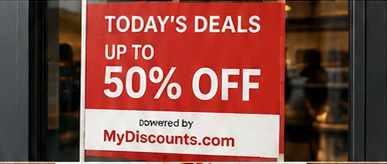
I would build a merchant network as shared promotion infrastructure. A store creates an offer once, enters the dates and restrictions in a structured form, and publishes it to a consumer page that shoppers can understand. MyDiscounts.com would be the public destination, while the merchant tools would stay focused on accuracy, scheduling, and results.
The model is different from a broad coupon directory. The offers come from participating merchants through authenticated accounts. Each business owns its listing, but the network controls the required fields and presentation. That creates consistency across a neighborhood coffee shop, a regional apparel chain, and an online specialty retailer without making their promotions look identical.
Design a reliable offer record
The basic record would include merchant identity, locations, category, start and end times, redemption method, inventory limits, exclusions, and the exact customer benefit. A merchant could add a code, barcode, printed card, or automatic checkout rule. The form would ask different questions for each method so the public listing never says “show this offer” when the cashier actually needs a code.
Commerce platforms such as Shopify and payment systems such as Square show how many promotion rules already live inside merchant software. I would begin with simple manual publishing, then add integrations only where they reduce duplicate entry and preserve the merchant’s actual conditions. An integration that imports an ambiguous discount faster does not improve the shopper experience.
Every record would have a visible source status: merchant published, network reviewed, or automatically synchronized. Those labels explain provenance without claiming that staff personally tested every checkout. If a merchant changes an end date or exclusion, the page history should record the update. Shoppers can then tell whether a screenshot from last week still reflects the current offer.
Give merchants useful distribution
A merchant dashboard should answer a few plain questions. How many people viewed the offer? How many opened directions or visited the checkout link? Which promotion was saved most often? Where technically possible, confirmed redemptions provide a stronger measure. The reporting should avoid pretending that every click became a sale.
The National Retail Federation provides broad retail research and industry context that can help a network understand seasonal planning. Individual merchants still need local calendars and their own margin rules. MyDiscounts.com could provide templates for common events, but each store would set the dates, inventory, and qualifying purchase that make the offer sustainable.
Distribution would include public merchant pages, category feeds, local pages, and an optional embeddable offer block for the merchant’s own site. A consistent link back to the source record would keep corrections in one place. The consumer side could let shoppers follow chosen stores without forcing an account for ordinary browsing.
Prevent a race to the bottom
A merchant network should not teach every business to post a larger percentage each week. Promotions can introduce a new service, fill a quiet appointment window, move seasonal stock, reward repeat customers, or create a useful bundle. The publishing form could ask for the business objective and suggest the right structure without exposing private margins.
I saw the importance of disciplined distribution while helping build Newswire.com. Sending more material is not the same as creating more attention. A network earns value by making each item consistent, findable, and relevant to the recipient. For merchant offers, the same principle means controlled categories, clear local targeting, and limits on repetitive promotions from one source.
Editorial review would focus on claim clarity and customer treatment, not rewriting every merchant’s voice. A store can sound like itself while still stating a usable end date. Promotions with misleading reference prices, missing material restrictions, or impossible inventory claims would be held for correction. Repeated problems could suspend publishing access.
Choose technology that merchants can support
The first merchant tool should work in a browser and on a phone. Many local operators will post between other tasks, so drafts, image guidance, and simple previews matter. Larger retailers may want feeds or APIs. A platform such as BigCommerce illustrates the broader ecosystem in which commerce data moves among storefronts and services, but the network should keep its own public schema small enough to remain dependable.
Location handling needs special care. One promotion may apply at every branch, another only at two stores, and a third only online. Each public page should name the valid channel and show local time for expiration. Merchant staff should be able to print a one-page internal summary so cashiers and managers know how to recognize the offer.
Consumer reports would go to both the network and merchant. A shopper could mark a location refusal, incorrect terms, or an expired code. The merchant gets a short window to respond, while the public listing can display a caution if the report affects immediate use. The network remains responsible for deciding when evidence justifies a pause.
A measured opening
I would start with one metro area and a few retail categories where offers change often enough to test the workflow. The goal would be complete records and reliable staff recognition, not the largest merchant count. A weekly review could compare scheduled promotions with shopper reports and identify which form questions prevent errors.
The business model might charge merchants for software, enhanced reporting, or distribution packages, but payment would not erase public correction history. Basic consumer access should remain free. The merchant buys a better way to create and understand promotions, not the ability to make unsupported claims.
MyDiscounts.com works as the public layer because shoppers can remember it and merchants can explain why their offers appear there. The network behind it would turn many independent promotion decisions into one readable list. I would judge success by fewer failed redemptions, repeat merchant publishing, and shoppers who return because the details were right.